Can Trees and Dry Weather Cause Subsidence?
How shrinkable clay, nearby vegetation and prolonged dry weather can affect foundations, and what should be investigated before repairs are specified.
Trees can contribute to foundation movement where their moisture demand affects shrinkable clay beneath a property, particularly during prolonged dry weather. Proximity alone does not prove the cause: soil type, foundation depth, drainage, vegetation and the pattern and timing of movement all need to be considered.
Engineering content reviewed 21 September 2026.
A focused inspection can assess the visible evidence and explain whether monitoring or further investigation is appropriate.
Ask about a structural inspectionHow can clay soil move during dry weather?
Some clay soils change volume as their moisture content changes. They can shrink during prolonged dry conditions and swell again as moisture returns. If the ground beneath part of a foundation changes more than the ground beneath the rest of the building, differential movement and cracking can occur.
The risk depends on the characteristics of the soil, foundation depth, the building's construction and local moisture conditions. A dry summer by itself does not prove that cracking is caused by subsidence.
Do nearby trees automatically cause subsidence?
No. A tree close to a house may be relevant, but distance alone does not establish causation. Species, size, maturity, soil conditions, foundation depth and the distribution of roots and moisture demand all matter.
The location and direction of cracking should also make sense in relation to the suspected cause. Other possibilities, including leaking drainage, local construction details and historic settlement, may need to be considered.
Do not remove a mature tree automatically: Tree work should be based on appropriate structural and arboricultural advice. Removal may not solve the problem and, in some clay soils, a substantial increase in ground moisture can create a risk of heave.
What signs may indicate seasonal movement?
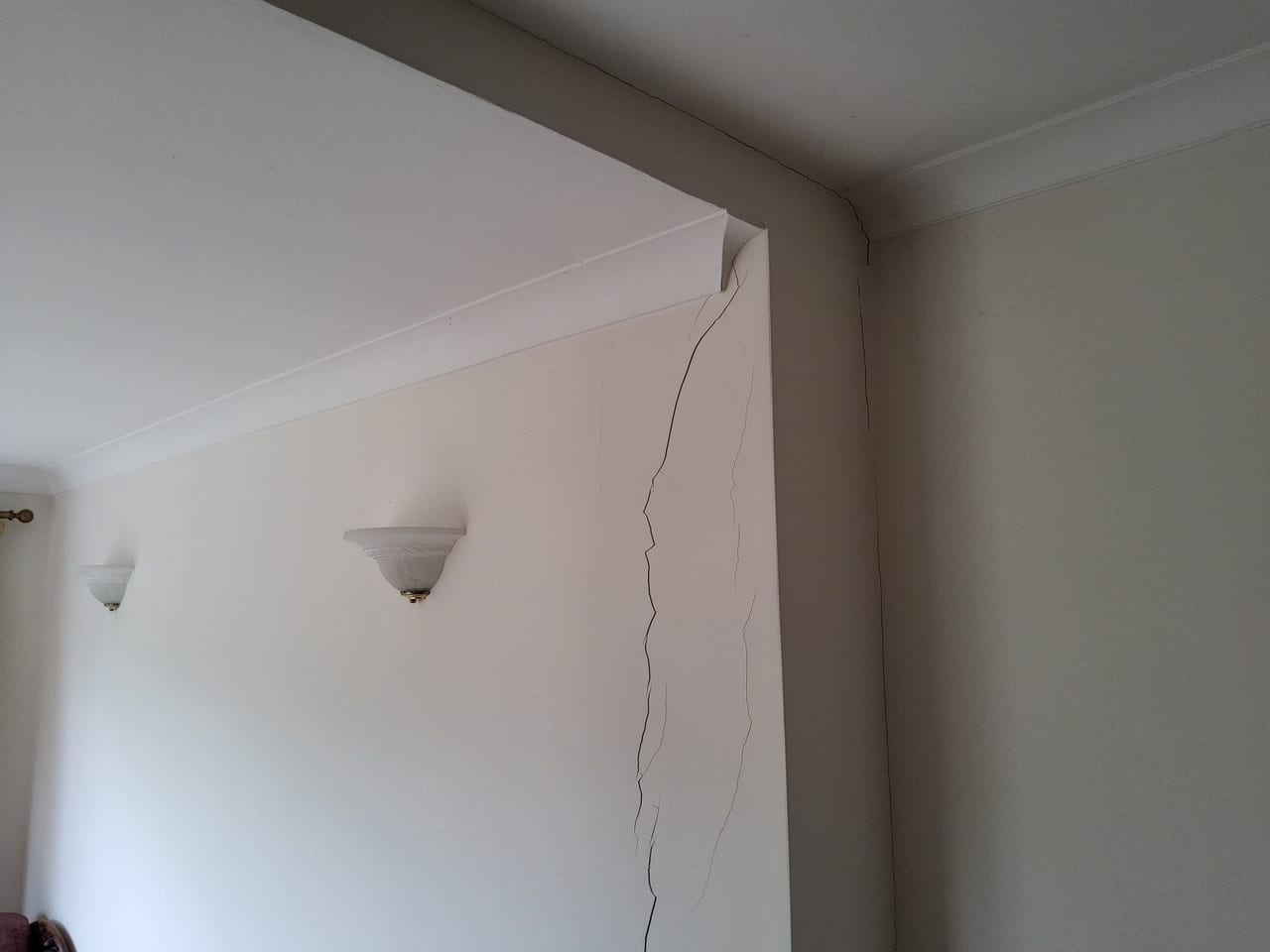
Cracks that appear or widen during dry periods and partly close during wetter months can be consistent with seasonal ground movement. Movement concentrated near one corner, an extension or the side of a property closest to substantial vegetation may also justify investigation.
These observations are clues rather than proof. Dated photographs and measurements can help establish a pattern, while a structural inspection can assess whether the visible damage is consistent with foundation movement or another cause.
- Diagonal or stepped cracking near corners and openings
- Doors or windows becoming harder to operate
- Cracks reopening after previous repairs
- A seasonal pattern of opening and partial closing
- Related external and internal cracking in the same area
What should be checked before major repairs?
A proportionate investigation normally starts by assessing the visible damage, relevant drainage and nearby vegetation. The next step depends on the evidence and may involve a CCTV drainage survey, monitoring, arboricultural advice or a ground investigation.
Ground investigation can help identify soil conditions and foundation depth. In more complex cases, laboratory testing, root identification or a period of monitoring may be needed before the likely cause and an appropriate repair strategy can be established.
Does tree-related movement always require underpinning?
No. The first objective is to understand and, where appropriate, manage the cause. Depending on the evidence, recommendations may include drainage repairs, planned vegetation management, monitoring and allowing time for ground conditions to respond.
Foundation strengthening should not be assumed from the presence of a crack, a tree or clay soil. It is normally considered only where the diagnosis, risk of continuing movement and consequences for the building justify it.
Need professional help with this?
Specific Structural Inspection — fixed price from £480, including the agreed site inspection and written report.
Ask about a structural inspectionFrequently Asked Questions
- Written by a Chartered Engineer (CEng MICE) with over 15 years’ structural engineering experience.
- Reports usually delivered in 3–7 working days
- Professional indemnity and public liability insurance
- 173+ five-star reviews on Google & Trustindex
Get Your Instant Quote
Enter your postcode to check coverage and see pricing