Can Leaking Drains Cause Cracks and Subsidence?
How defective drainage and concentrated water can affect the ground around foundations, what signs to look for and when further investigation may be needed.
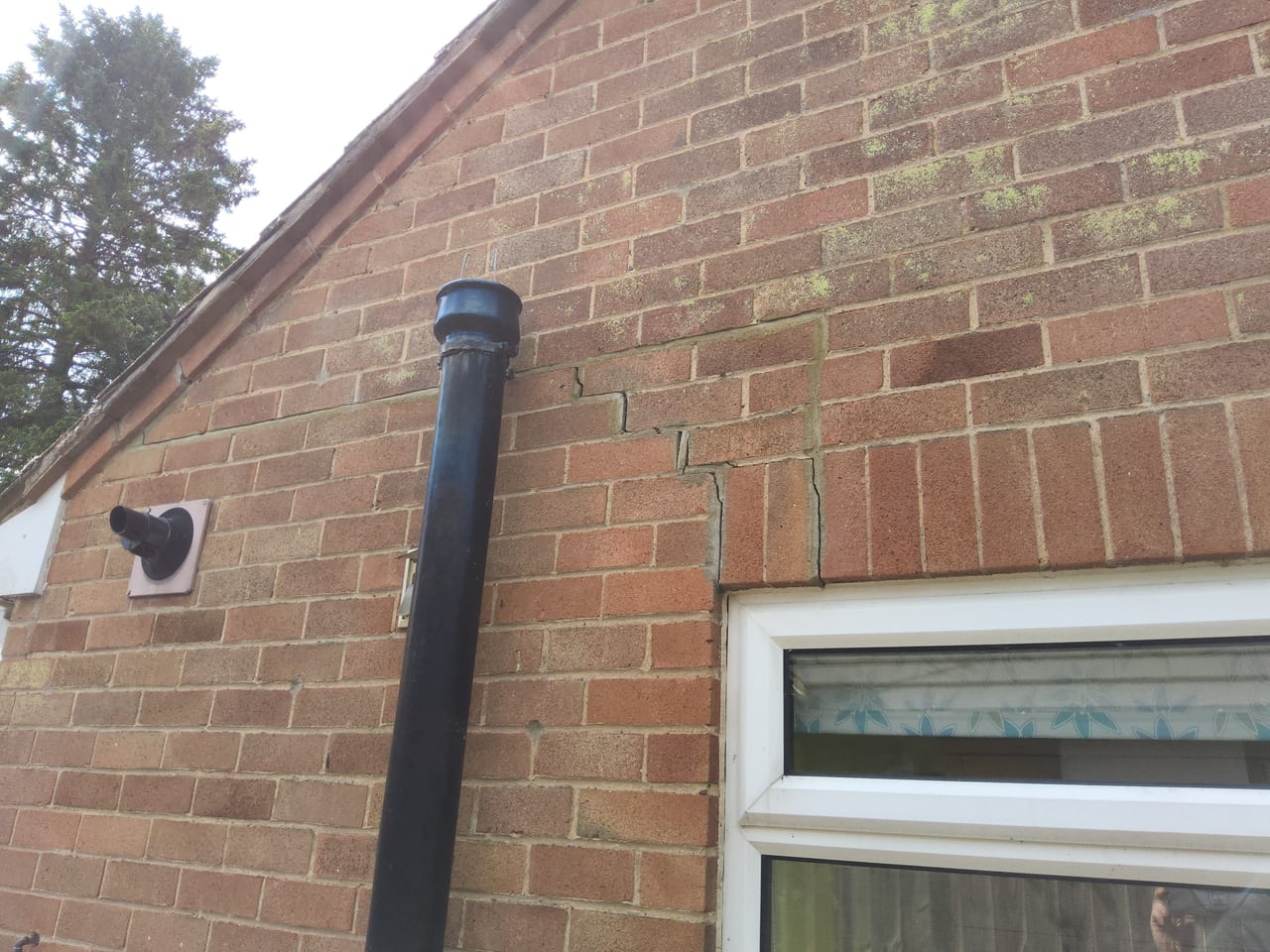
Leaking drains can contribute to local ground movement by softening, eroding or washing out supporting material, depending on the soil and foundation conditions. Drainage is one possible cause of cracking, so the defect and the building movement need to be investigated rather than assumed.
Engineering content reviewed 21 September 2026.
A structural inspection can assess the visible movement and identify whether drainage investigation should form part of the next steps.
Ask about a structural inspectionHow can defective drainage affect foundations?
Underground drainage should carry water away without releasing it into the surrounding ground. A cracked pipe, displaced joint or defective connection can concentrate water beside or beneath a foundation.
Depending on the ground conditions, this may soften susceptible soil, remove fine material or create local loss of support. In clay, changes in moisture can also alter soil volume. The resulting movement is often local rather than uniform across the whole building.
It is not only underground drains
Rainwater can also become relevant where a downpipe is disconnected, a gully overflows or paving directs water towards the house. Persistent ponding beside a wall can expose the foundation area to conditions it was not intended to receive.
Damp staining alone does not prove structural movement, and a drainage defect may exist without causing foundation damage. The significance depends on where the water is going, the ground and foundation conditions, and whether the cracking pattern is consistent with local movement.
- Recurring blockage, slow drainage or unexplained odours
- Sunken paving or local depressions near a drain run
- Overflowing gullies or downpipes discharging beside the wall
- Cracking concentrated near a bathroom, kitchen, manhole or drain route
- Local movement that does not follow a clear seasonal pattern
When is a CCTV drainage survey useful?
A CCTV survey can inspect the inside of accessible drainage runs and identify defects such as displaced joints, fractures, root intrusion or obstructions. It is often a sensible next step where the crack pattern and drainage layout suggest a possible connection.
The survey should identify the location and depth of relevant defects where possible. Finding a damaged pipe does not automatically prove that it caused the structural movement, but it provides evidence that can be considered alongside the building inspection.
Should the drains be repaired before the cracks?
Where a drainage defect is contributing to movement, addressing the water source is normally more important than making an immediate cosmetic repair. Repointing or filling cracks before the cause is managed can conceal useful evidence and the cracks may return.
The correct sequence depends on the condition of the building. Urgent safety or weatherproofing work may still be necessary, while permanent masonry repairs may be better deferred until the cause has been treated and the structure has had time to stabilise.
What happens during a structural inspection?
The engineer considers the crack pattern, levels and distortion, visible drainage features, ground surfaces and relevant parts of the property. A standard structural inspection does not normally include opening the ground or carrying out a CCTV survey unless this has been specifically agreed.
The report can explain whether drainage investigation is proportionate, what evidence would be useful and whether monitoring or another specialist investigation should follow.
Need professional help with this?
Specific Structural Inspection — fixed price from £480, including the agreed site inspection and written report.
Ask about a structural inspectionFrequently Asked Questions
- Written by a Chartered Engineer (CEng MICE) with over 15 years’ structural engineering experience.
- Reports usually delivered in 3–7 working days
- Professional indemnity and public liability insurance
- 173+ five-star reviews on Google & Trustindex
Get Your Instant Quote
Enter your postcode to check coverage and see pricing